
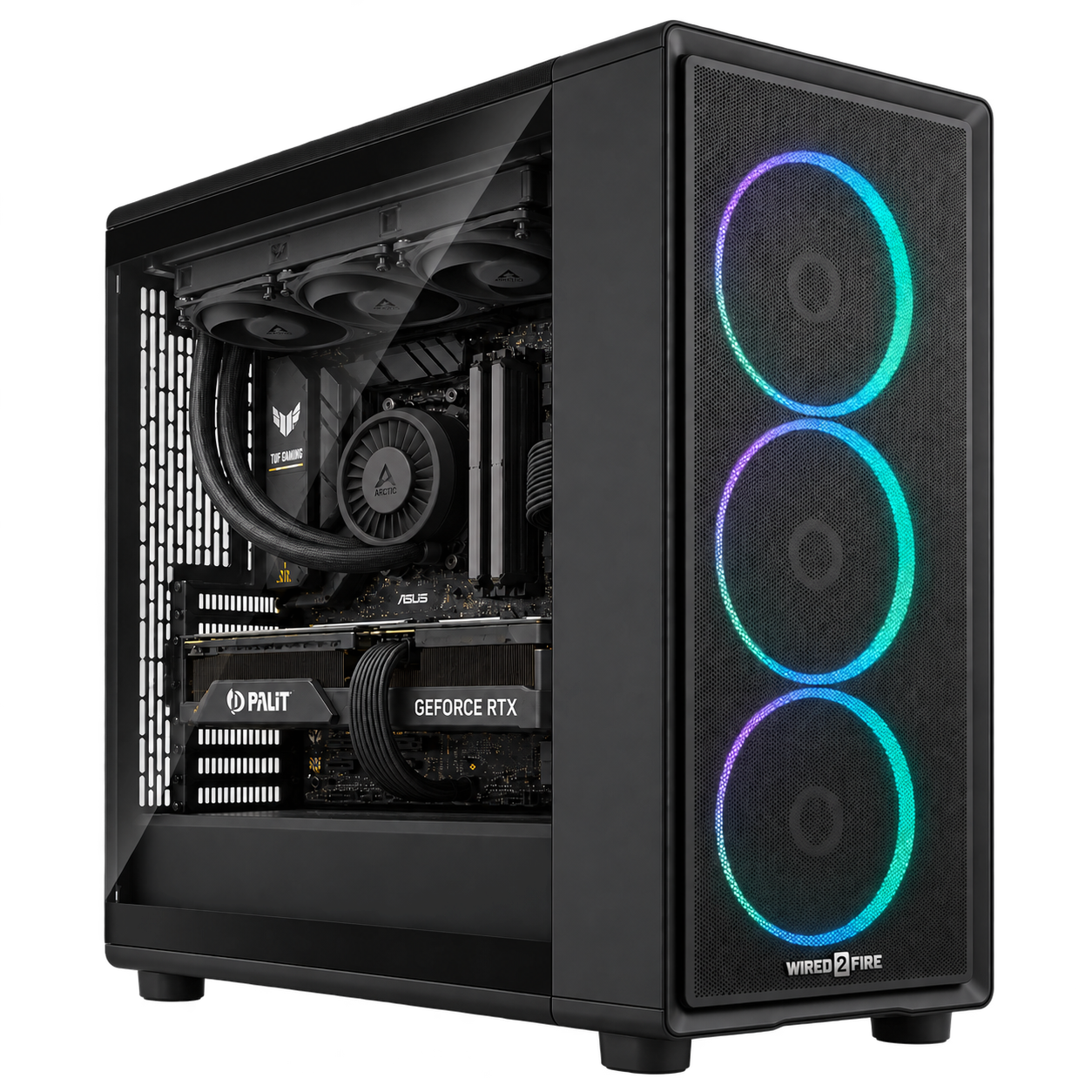
Introducing our collaboration with Wired2Fire, a new range of flight simulation PCs and our plans to explore the technical side of getting the most from Microsoft Flight Simulator and beyond. Anyone who has spent a reasonable amount of time using a flight simulator will probably be familiar with the frustration of trying to get everything running just the way they want it. You can spend thousands of pounds on a powerful computer, invest in some fantastic aircraft and scenery, and still find yourself spending an evening adjusting graphics settings, investigating stutters or trying to work out why performance has suddenly changed.
It’s something we’ve experienced ourselves, and it’s one of the reasons we’ve been keen to develop the Technical Hangar into more than simply a place to discuss the latest hardware.
When we first started AvGeekHangar, our intention was to create a community-focused platform where flight simmers could discover new products, share experiences and find useful information without everything revolving around commercial partnerships and affiliate promotions. That remains our approach, but we also recognise that there are businesses within our hobby whose knowledge, experience and genuine enthusiasm can make a valuable contribution to the community.
One of those businesses is Wired2Fire, a UK-based specialist PC builder we’ve been getting to know through our involvement with FSimUK.
Our relationship with Wired2Fire developed during preparations for FSimUK 2026 at Aerospace Bristol, where AvGeekHangar was responsible for bringing together the show’s Community Hub. We wanted the Hub to be somewhere visitors could spend time, meet fellow enthusiasts and experience some of the different aspects of flight simulation away from the main exhibition stands.
Wired2Fire supported that vision by providing PCs for the Community Hub, allowing visitors to see and experience the systems in a flight simulation environment. They also generously donated Honeycomb flight simulation hardware for the event’s Boarding Pass Competition, helping us provide another worthwhile prize for visitors.
What has particularly interested us throughout our conversations is the personal enthusiasm for flight simulation within Wired2Fire’s leadership. It’s one thing for a PC manufacturer to recognise that flight simulation is a market for high-performance computers, but quite another to have people within the business who understand the hobby and the challenges that come with it.
That shared interest has led to discussions about how we might work together beyond selling computers, particularly through technical articles, practical advice and content that could help flight simmers understand their systems and make more informed decisions about future upgrades.
“Flight simulation is something we’re hugely passionate about at Wired2Fire – it’s been a focus for us for more than twenty years. The enthusiasm, generosity and willingness to share knowledge never fails to disappoint in the community, as we once again discovered at FSimUK in Bristol where we launched our new range of flight simulation tuned PCs. We want to continue to play an active part in helping this community grow, making simulation more accessible and supporting the people who put so much of their own time and energy into it. That’s why working with organisations like AvGeekHangar means so much to us. We share a belief that community comes first, and that the best partnerships are built on genuine enthusiasm, trust and a desire to give something back. We’re really excited about what we can achieve together.”
Ben Miles, Managing Director, Wired2Fire.

One of the subjects we’re particularly keen to explore with Wired2Fire is how we approach performance in flight simulation.
It’s easy to look at a computer specification and assume that a faster processor, more powerful graphics card or additional memory will automatically produce a better experience. Those components certainly matter, but flight simulation has a habit of making things rather more complicated.
Think about two people using Microsoft Flight Simulator 2024. One might spend most of their time flying a Cessna around the British countryside in daylight, enjoying relatively uncomplicated flights from smaller airfields. The other might regularly operate a complex Airbus into Heathrow at night, using detailed third-party scenery, live weather, online ATC, traffic injection and several additional applications running alongside the simulator.
Both are enjoying the same hobby, but they’re asking very different things of their computers. Even within our own flying, the experience can change considerably depending on the aircraft we’re using, the airport we’re visiting, the weather conditions and the add-ons we have running. A system that performs beautifully in one situation can behave quite differently in another, and that doesn’t necessarily mean there’s anything wrong with the computer.
This is why we believe the conversation about flight simulation hardware should begin with a few questions about how somebody actually uses their simulator. What aircraft do they fly? Are they flying airliners or general aviation? Do they prefer short flights into busy airports or longer journeys? What resolution and display setup are they using? Do they use online ATC, live traffic, complex scenery or additional software?
Understanding those things is often more useful than simply asking which computer has the biggest numbers on its specification sheet.
We’re hoping to explore these subjects in greater detail through the Technical Hangar, drawing on Wired2Fire’s hardware knowledge alongside the experiences of people within the flight simulation community. We want to look at how different styles of flying place different demands on a system, why stutters and inconsistent performance can occur, and what can be achieved through sensible settings and optimisation before considering expensive upgrades.
Importantly, that information should be useful whether someone owns a modest system they’ve been using for years or has recently invested in the latest high-end hardware.
Alongside our plans for technical content, we’re pleased to introduce the Wired2Fire Sim-X Valkyrie range to the AvGeekHangar Store.
The range covers five configurations, beginning with an AMD Ryzen 5 system featuring an NVIDIA GeForce RTX 5060 Ti and extending to a flagship AMD Ryzen 9 X3D configuration with an RTX 5090. Between those are RTX 5070, RTX 5070 Ti and RTX 5080 options, providing a selection of hardware specifications at different price points.
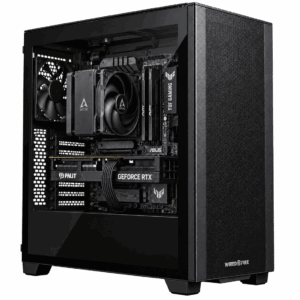
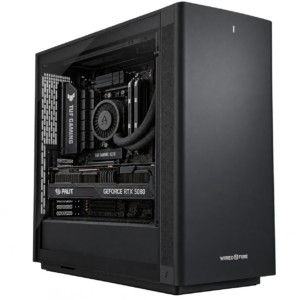
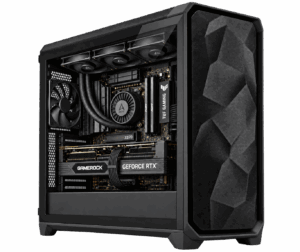
Rather than suggesting that everyone needs the most expensive computer available, we’d encourage anyone considering a new system to think about the flying they enjoy today, the equipment they’re using and what they might want to achieve in the future.
The five configurations provide a useful starting point for those conversations, but specifications alone don’t tell the whole story. As our work with Wired2Fire develops, we hope to help readers better understand which aspects of a PC make the biggest difference to their particular flight simulation experience.
The systems are available through the AvGeekHangar Store, with specifications and pricing provided for each configuration. Explore the Wired2Fire Sim-X Valkyrie range in the AvGeekHangar Store
We’ve always been clear that AvGeekHangar is a community-first project, and we don’t want the Technical Hangar to become a collection of sponsored recommendations or articles designed simply to encourage people to spend money.
Our relationship with Wired2Fire does include a retail arrangement through which AvGeekHangar earns a margin on systems sold through our store. We think it’s important to be open about that, but it’s equally important to explain that the technical content we want to develop together isn’t dependent on anyone purchasing a product.
We want to be able to discuss performance problems, question whether upgrades are worthwhile, explore different hardware options and share practical advice without every conversation ending with a recommendation to buy something new.
Our decision to offer the Sim-X Valkyrie range reflects the confidence we’ve developed in Wired2Fire as a business, the people we’ve dealt with and their willingness to support the wider flight simulation community. It isn’t a claim that every simmer needs one of these systems, or that a particular specification will eliminate every performance problem.
If our work together helps someone improve the performance of the computer they already own, understand why their simulator behaves differently in certain situations or avoid spending money on an unnecessary upgrade, we’ll consider that a worthwhile contribution.
Over the coming months, we hope to share more technical articles and practical discussions with Wired2Fire, looking beyond hardware specifications to the things that actually influence our experience in the virtual cockpit. Because ultimately, whatever aircraft we fly and however much we’ve invested in our simulators, most of us want the same thing: to spend a little less time adjusting settings and a lot more time enjoying the flying.
AvGeekHangar is a retail partner of Wired2Fire and may earn a margin from sales through our store. Our editorial content and technical discussions are intended to provide useful information to the community, irrespective of purchasing decisions.